
It is fascinating how water analogies can be used to explain energy concepts. It is possible to collect clean water from a source until the tank is full, no more. The same is valid for the energy.
At the dawn of renewable energy era, it was common to perceive the National Grids like infinite containers of energy, where everyone can inject fresh clean energy and create a better world.
Unfortunately, when the renewable penetration increase, every electrical network faced the reality where every kWh can only be produced when there is a corresponding load to consume it.
This concept is certainly not new, it's a fundamental rule well understood by every off-grid system operator. In such systems, turbine-generated energy must align with load consumption to preserve network stability.
Indeed, renewables unveil the fact that there are not bottomless Grids. Regardless of scale, every electrical network, from the smallest to the largest, resembles an off-grid system and must adhere to the same fundamental principles.
It may appear a strong statement, but in fact renewables made blurry the boundaries between the off-grid and on-grid definition. When renewables were just a small portion of the energy production, this surplus of energy was balanced by small fluctuations in the turbines production profile, whereas now with a relevant portion of the energy coming from renewable source systems the behavior of the traditional power plants and the accuracy required from the grid operator has been affected significantly.
An appropriate design shall preserve the existing generation profile between certain limits. The limits may be technical, like reactive power requirement, voltage and frequency stability or technical limit of the turbines. The limits may be also based on previous power purchase agreement or based on environmental regulation considering that when the turbines work below certain percentage of the nominal loads, efficiency decrease, and emission levels increase.
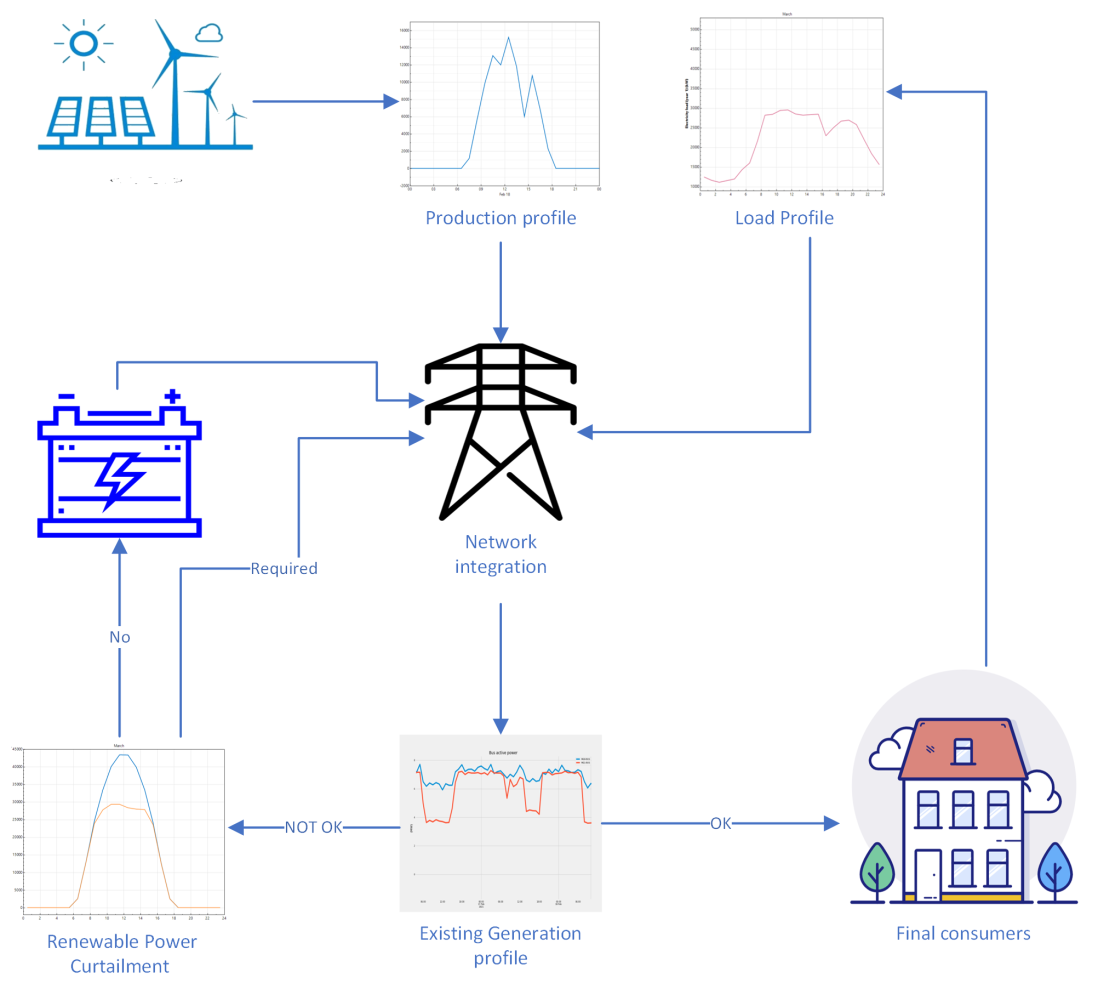
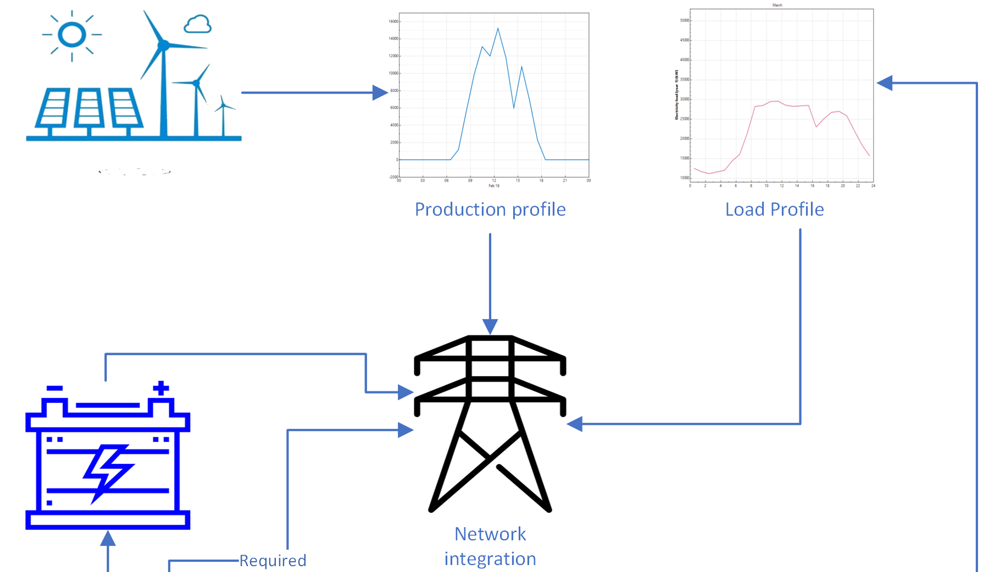
In brief, the key message is to produce energy only when it can be effectively consumed, emphasizing the pivotal role of loads. Renewable energy is fundamental for the future, but its true benefit lies in its appropriate utilization and consumption. Overlooking this aspect in system design nullifies installation advantages.
Grid operators worldwide are imposing regulations to limit uncontrolled energy injections, necessitating careful planning for renewable projects. This approach applies universally, emphasizing the importance of considering both energy production and consumption, with the grid serving as a conduit, not a sinkhole.
Financially sustainable investments in renewables shall focus on energy utilization, minimizing curtailment and minimizing impact on existing electrical networks.
Hence, is it feasible to treat a nationwide network, encompassing diverse activities, habits, cultures, and climates, in the same manner as an isolated off-grid system?
The answer may be something similar to a famous sentence that says, "Think Globally, Act locally".
Being capable to implement a renewable energy project that serve the nearby loads first, it would mean decreasing the remote generation through fossil fuel and avoid undesirable excess of energy dispatched in the network.
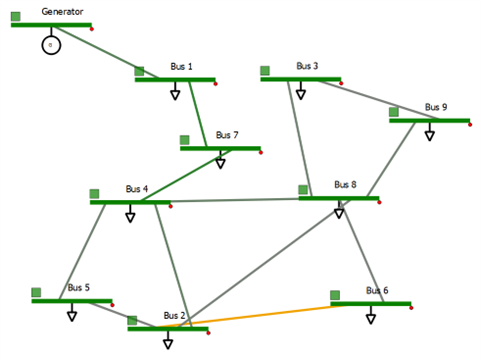
To streamline this concept, it is possible to create a community and assume that the power generation is accomplished through a solitary 12 MW generator linked to a gas turbine.
The most intricate task is profiling the loads. While annual power consumption is influenced by climate zones and geographic variables, it's even more dependent on socio-economic and cultural factors.
It is possible to use the data sourced from OpenEI, facilitated by the Office of Energy Efficiency & Renewable Energy (EERE) and the Department of Energy (DOE) and arrange the modelling using appropriated assumption and reduction factors.
This is also the approach suggested by a widely used software for the optimization of models with multiple energy resources.
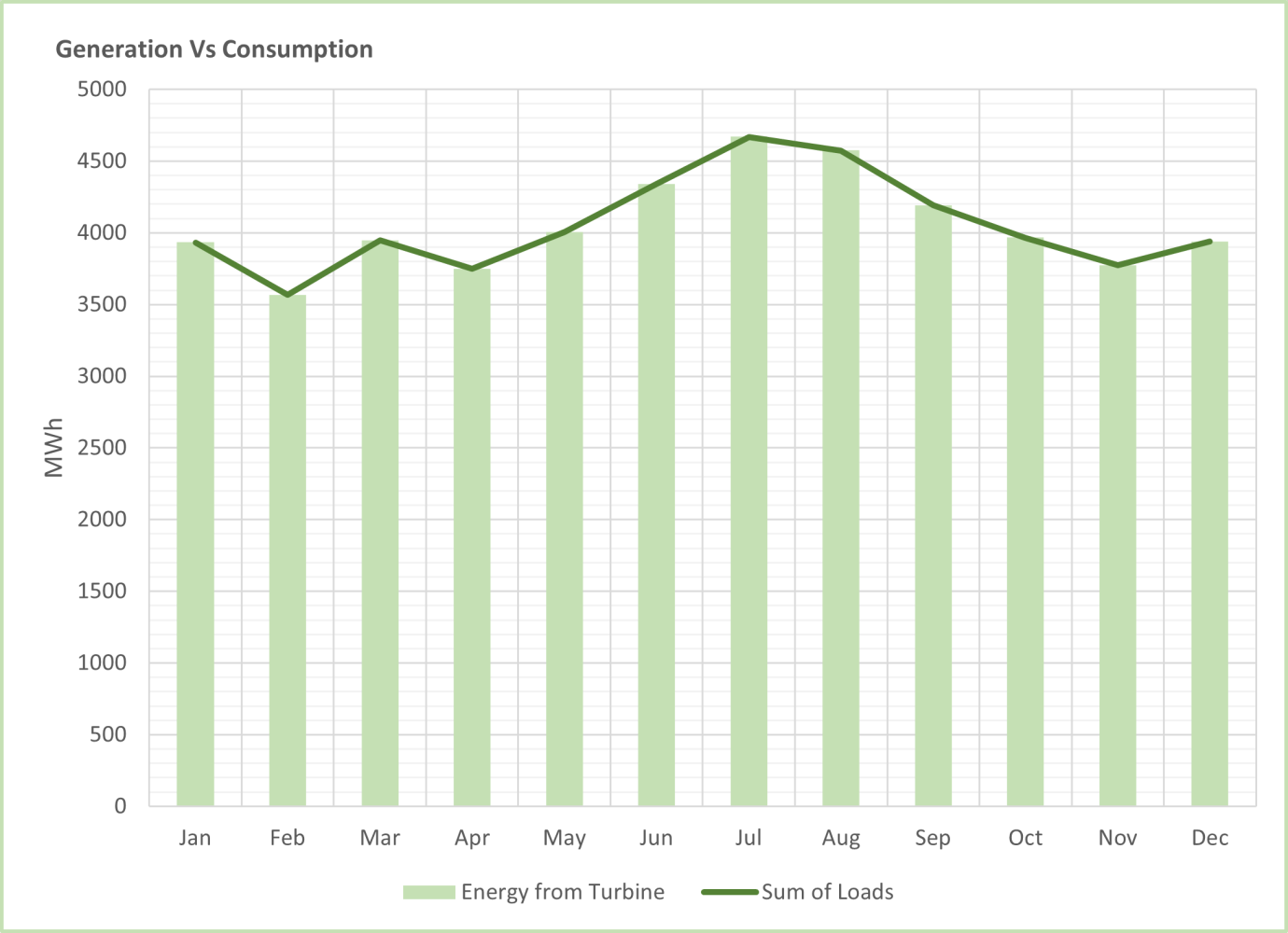
At the end of this intense analysis, with the proper assumption regarding losses in the energy transmission, the comparison between the energy generated and the energy consumed can be summarized in a simple chart.
In this perfectly balanced system, a clean energy source can be installed, for example a 12 MWdc photovoltaic system. Taking a picture of a random day in the year, it is useful to compare the PV production with the load profile.
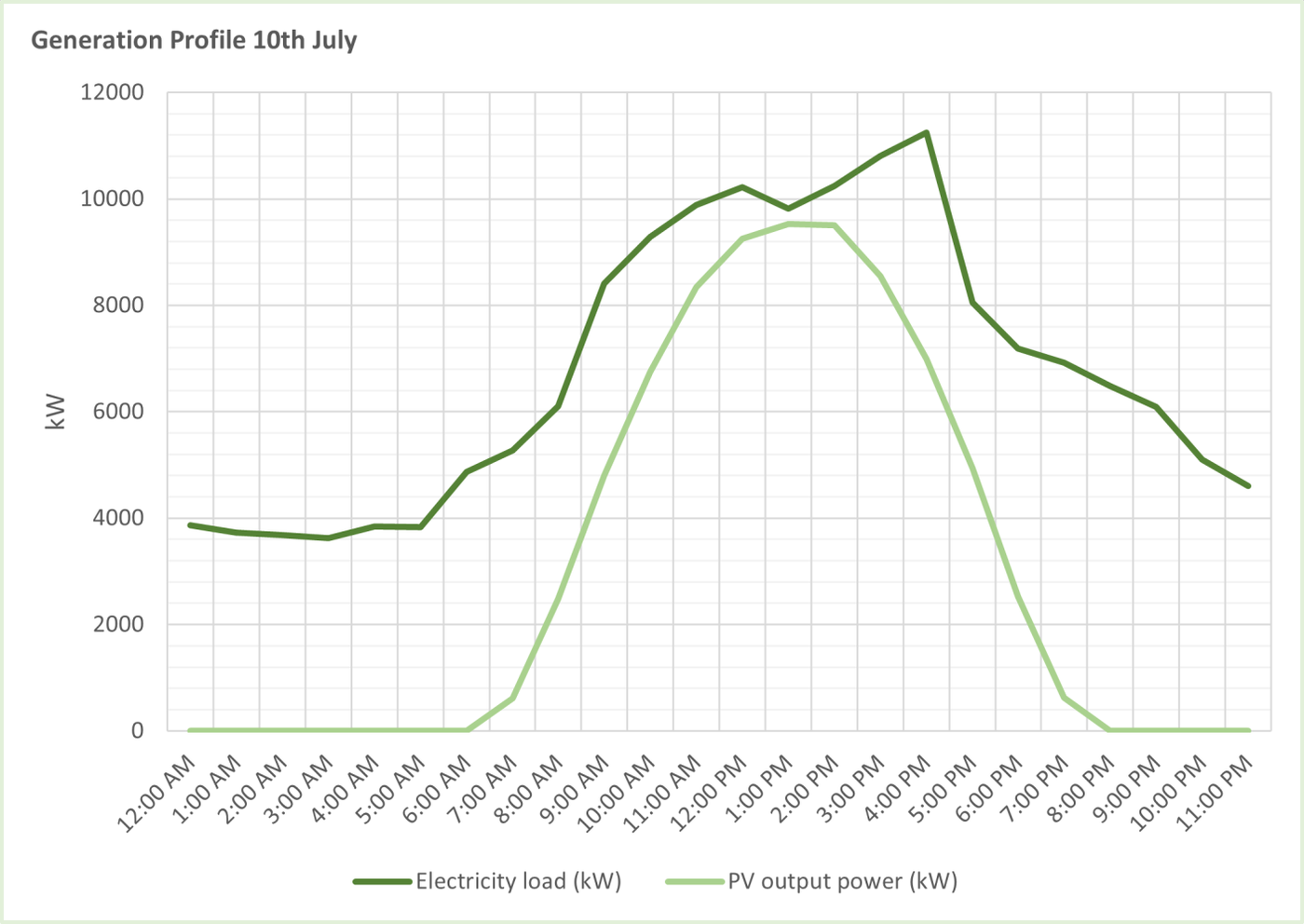
Reading these two profiles, installing the PV system looks a perfect match, the loads are higher than the production and fuel consumption will be minimized.
However, it is required that the turbine works in parallel to ensure the stability of the Grid. The PV system can work in parallel with Gas Turbine or Diesel generator, but minimum loading of the primary source has to be maintained.
Operating a diesel generator below 30% of its rated output for extended periods can lead to issues like engine exhaust slobber, deposit buildup, power loss, and increased maintenance costs. Gas generators should not operate below 50% load to avoid complications like ash deposits, reduced detonation margin, and emissions non-compliance. Both scenarios can result in unplanned downtime or failure, which in this small network means instability and blackout.
To maintain the essential operational parameters dictated by the primary energy source, it can be adopted a straightforward approach by setting the minimum generator working load at 30%. This ensures operational stability and consistency. For simplicity spinning reserve and other stability topic are not considered.
With primary source generation limits and PV power injection the new daily profile is the following:
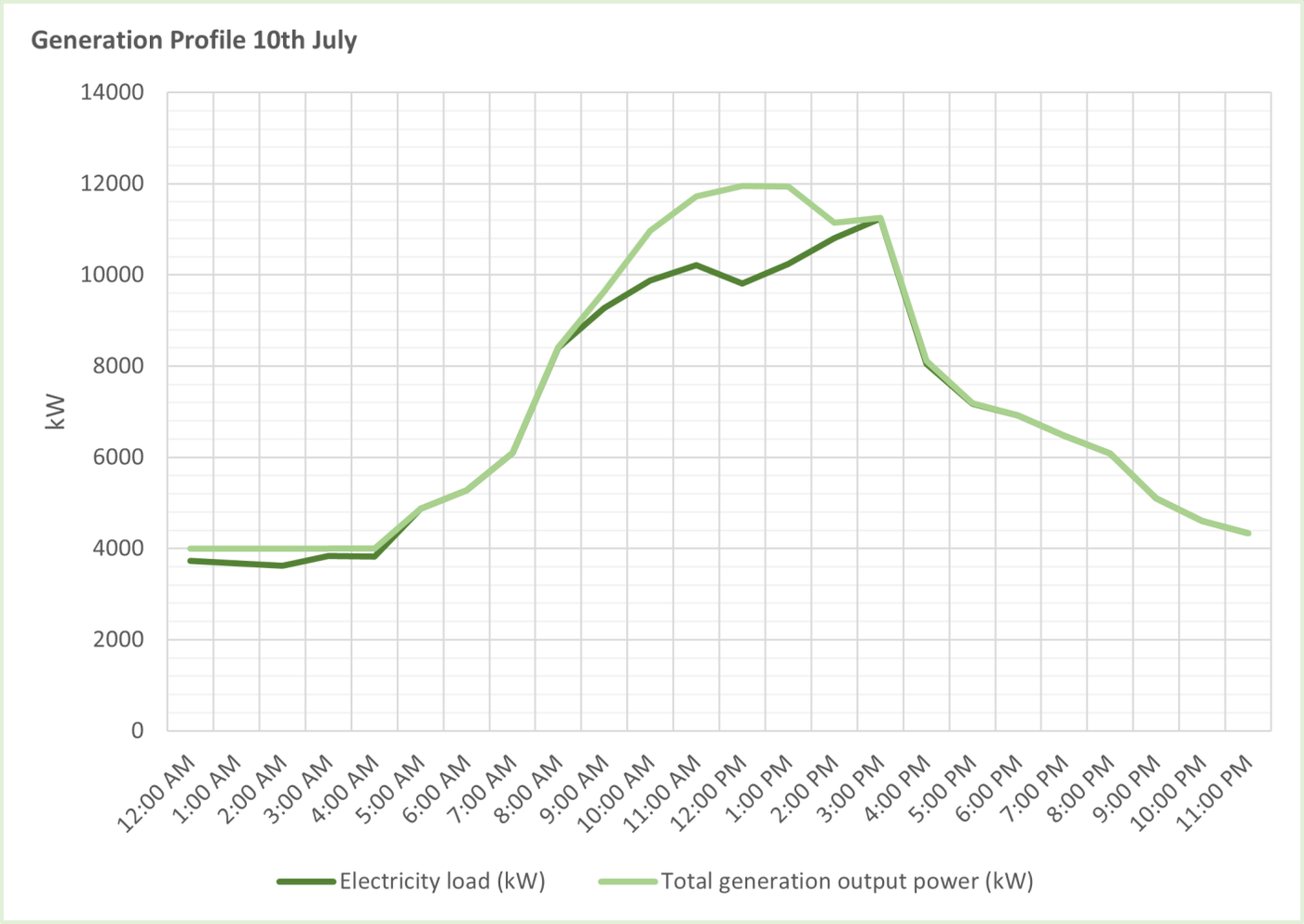
With the evident result that a portion of energy from PV shall be curtailed, in term of annual energy:
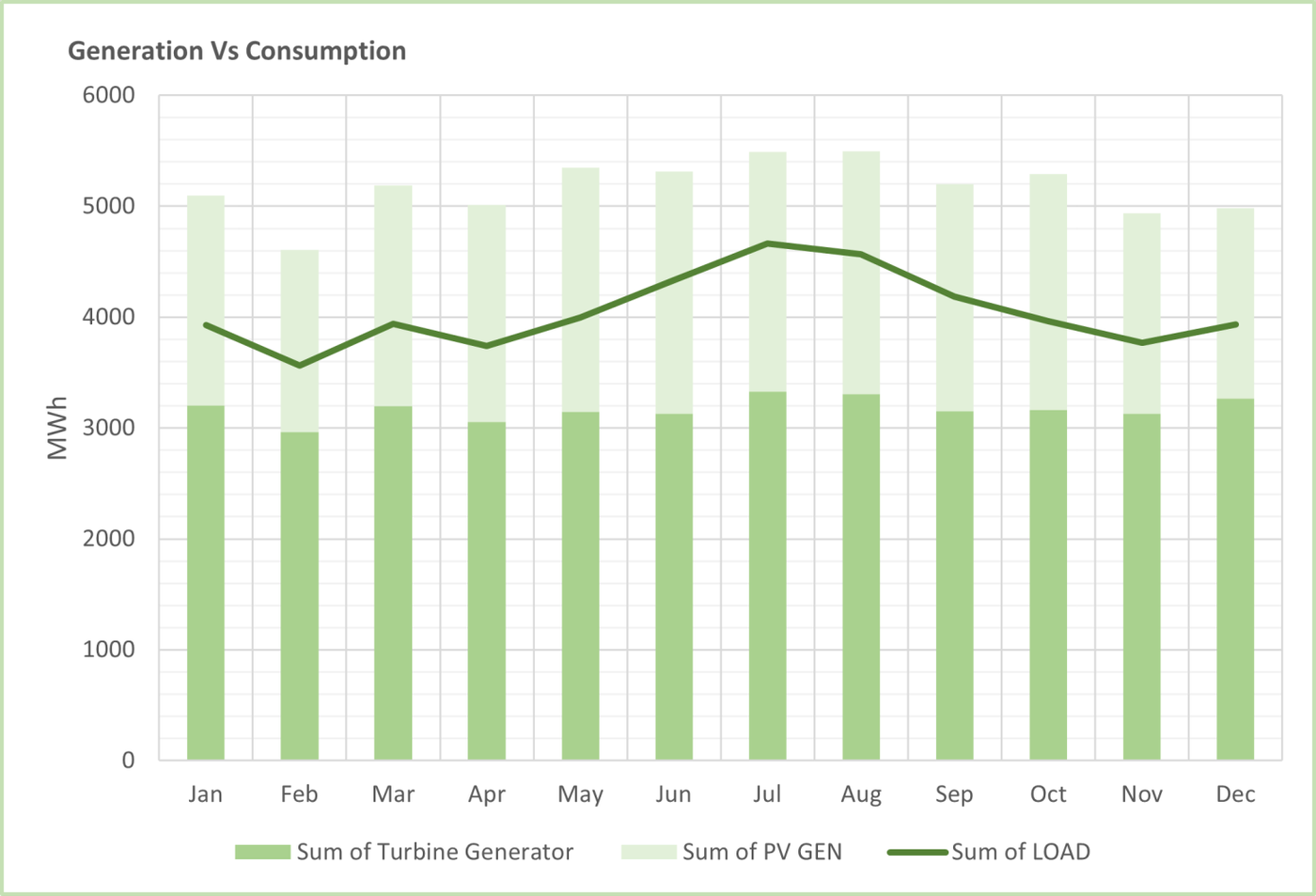
It's evident that when considering stability constraints, energy production surpasses load requirements, resulting in surplus energy that must be curtailed. The chart below illustrates the amount of energy from the PV system that cannot be integrated into the off-grid system.
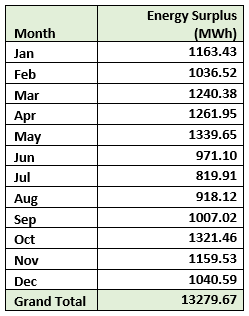
Energy Surplus (MWh)
In this off-grid system, the surplus energy has no destination, limiting the potential of the PV system production and related benefits. In this specific example, the PV system potential annual production is 21,781 MWh, however, a substantial 61% of this production (13,279 MWh) remains unused due to the surplus energy having no outlet. It's important to note that if the turbine's manufacturer impose a minimum loading higher than the illustrative 30% threshold, the energy waste increases accordingly.
Setting aside the potential economic losses associated with such an investment, can a system be considered well-designed when 61% of its production goes to waste? Moreover, should the perception of this inadequate design system change simply because it's connected to a larger network?
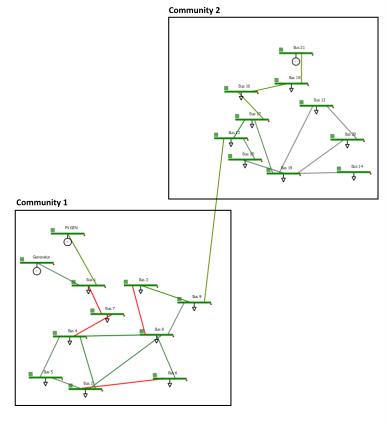
Well, to answer the question it is possible to break the off-grid boundaries and connect the system in the example to a similar community, creating now a network of two communities.
Connecting two communities means coordinating the network stability and the power generation accordingly. The second community has the same kind of loads and the same generation limits, Community 1 is the first off-grid system and Community 2 the newly connected system.
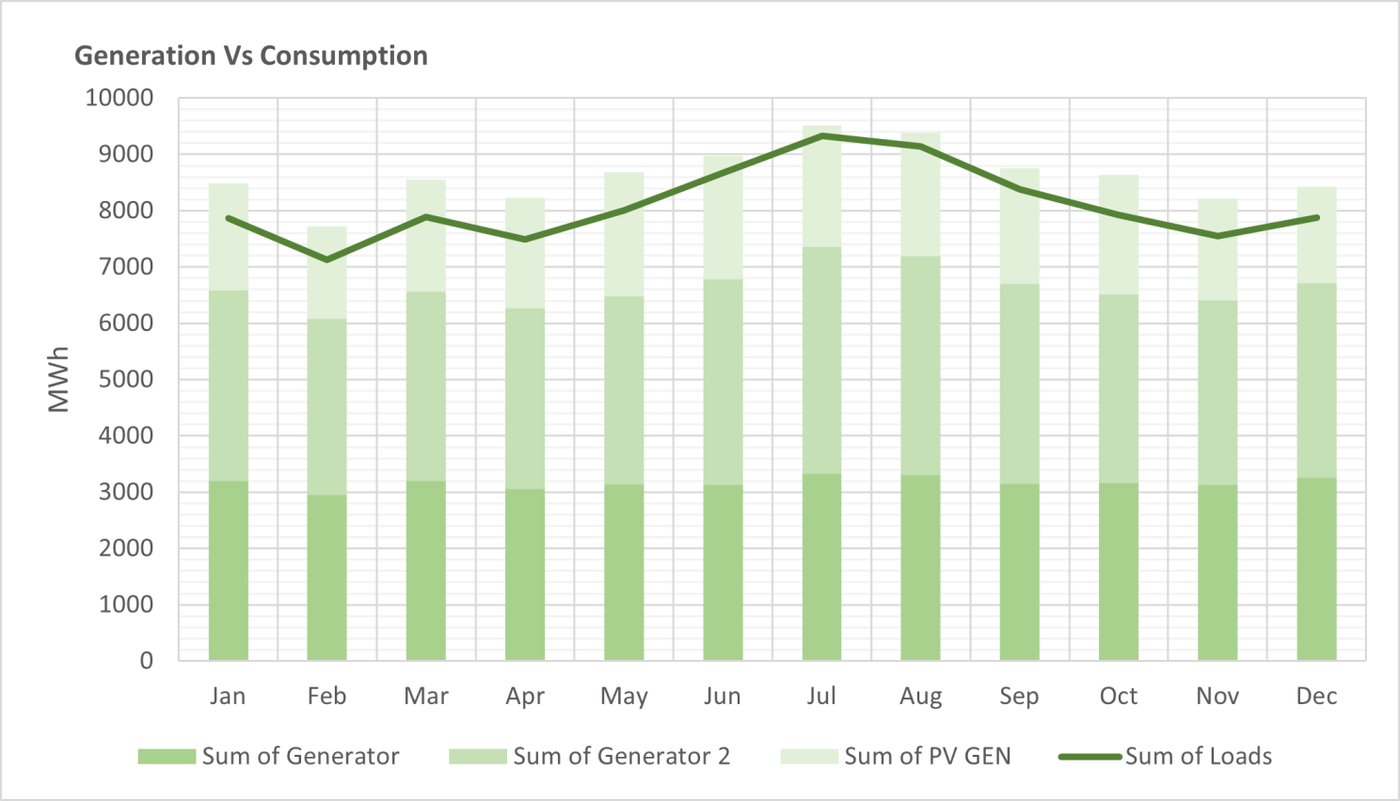
Dispatching the energy to the Community 2 enables increased utilization of PV production.
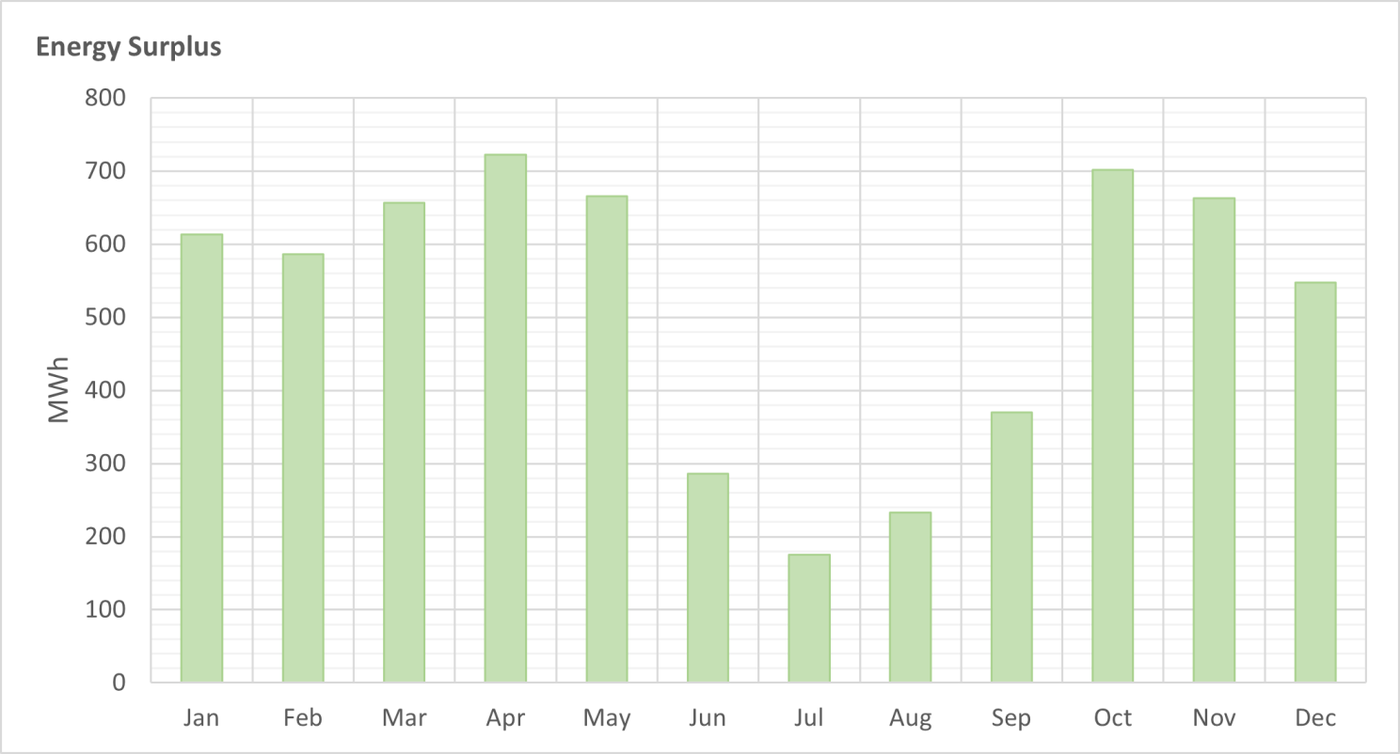
It's evident that a larger portion of clean energy can now be put to use. Nevertheless, it remains essential to restrict injections from the PV system to uphold network stability. The energy surplus is still relevant as per the chart below.
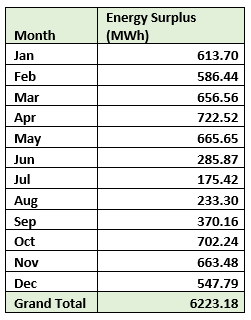
It is worth noting that the portion of energy that remains uninjectable and unutilized still accounts for approximately 28.5% of the PV system potential production.
Consequently, the implementation of the renewable energy system in Community 1 relies on Community 2 to achieve a favorable energy utilization scenario. This implies that the individuals or entities, including investors, designers, board members, or authorities, who coordinated the installation, are effectively transferring the responsibility of their investment to another community.
The energy surplus could potentially be addressed by incorporating a battery storage system, but this would necessitate an additional investment. If this investment is solely aimed at compensating for the initial over-sizing of the PV installation, it might undermine the overall cost-effectiveness of the project.
The results underline mainly two things, the true worth of the clean energy production is the effective consumption of this energy and not artificial financial compensations that shifts responsibility to others.
This is valid for a small house, for a small town or for a large region. Larger is the network, larger is the number of entities that share the responsibility of mitigating the consequences of the initial investment. However, it doesn't alter the fundamental reality that the investment is made possible because someone else bears the burden.
Indeed, this underscores the second important aspect: planning a renewable energy installation should encompass all communities involved, with shared benefits and responsibilities.
In the example the power plant production of the Community 2 has been limited to the minimum, however it may be not convenient for the Community 2, due to precedent agreements, efficiency decrease or environmental reasons. Indeed, turbines at low load may cause emissions to deviate from expected levels, potentially resulting in non-compliance with emissions regulations.
Turbine manufacturers are now providing retrofit services for existing turbines to facilitate better integration of renewables. These services include benefits such as reduced minimum part load with lower carbon monoxide emissions, improved combined cycle efficiency during part-load operation, and expanded operating range.
In summary, it is necessary for authorities and governments to shift their focus towards the effective consumption of clean energy, emphasizing rational and logical energy utilization rather than pursuing excessive production figures.
Tailoring the renewable energy systems to optimize the consumption locally, avoid waste of resources and it will result in a fine materials and energy optimization, making the clean energy production financially feasible and genuinely sustainable.