
In the evolving landscape of renewable energy, accurate load forecasting stands as a basis for informed investment decisions. In mature and well documented markets, this data is readily available, allowing for precise forecasting models, but those rely heavily on historical consumption data, which is often unavailable or unreliable in emerging markets. In recent projects, this was found to be particularly true for oil and gas facilities and new developments in remote regions.
In the absence of accurate load forecasts, investing in energy infrastructure becomes a bet, potentially leading to overcapacity, underutilization, and unsustainable projects. To overcome these challenges, it was necessary to consider how the load forecasting topic could be approached in data-scarce environments.
Reliable source of data
Investors and developers often rely on Typical Meteorological Year (TMY) as a trusted resource for sizing renewable energy systems, which offers insights into solar irradiance, temperature, wind speeds, and other critical factors.
Coherently, by leveraging Typical Meteorological Year data and understanding human behavior, it is possible to create patterns that help forecast electrical loads, despite the absence of reliable consumption data.
Weather and Human behavior
While it's natural to assume that energy consumption is correlated directly with weather conditions, studies and simulations have shown that this relationship is indirect and weak. Instead, energy consumption is closely linked to human behavior, which is influenced by the weather conditions.
For example, extreme temperatures may lead to increased use of heating or cooling systems, but the actual energy load depends on how people adapt their behavior in response to these conditions. Understanding this, the focus shifts from weather patterns to behavioral patterns influenced by weather. This allows energy consumption to be modeled more accurately.
Introducing Discomfort and Human Activity Indices
To capture this dynamic, two key variables derived from TMY data were introduced:
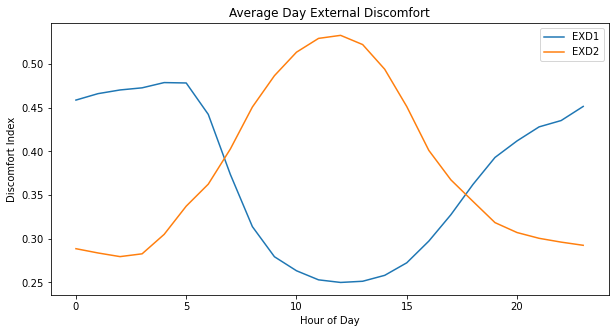
Discomfort Index (EXD): Quantifies the level of discomfort due to deviations from optimal temperature, wind speed, humidity and others weather conditions. It helps predict how likely people are to use energy-intensive devices like air conditioners or heaters.
Human Activity Index (ACT): Models typical human activity patterns based on factors like sunrise and sunset times, which influence daily routines and, consequently, energy usage.
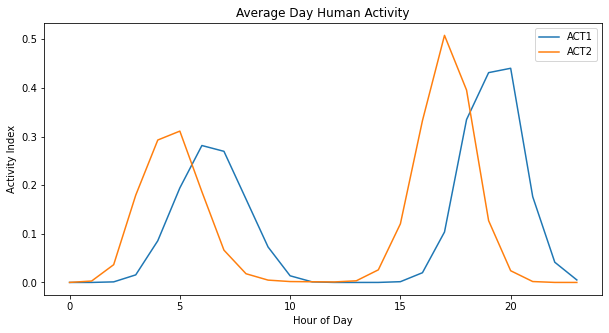
By integrating these indices into forecasting models, realistic energy load profiles can be simulated that reflect how people are likely to behave and, consequently, how they consume energy, in response to their environment.
Machine Learning Models
With these new variables, machine learning is used to train models using existing load patterns from other locations:
These models can be trained on available load patterns, such as those from similar facilities or open datasets, and the learned relationships applied to forecast loads in target locations.
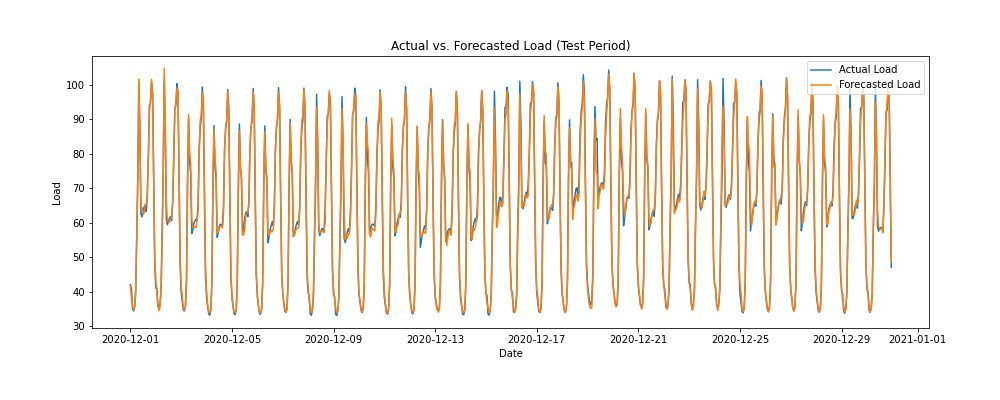
This method achieves high accuracy, with Mean Absolute Percentage Errors (MAPE) between 2-9%, despite the data-scarce environment.
Model Performance
Once the model achieve adequate results, it is possible to forecast the annual hourly load profile in the target location.
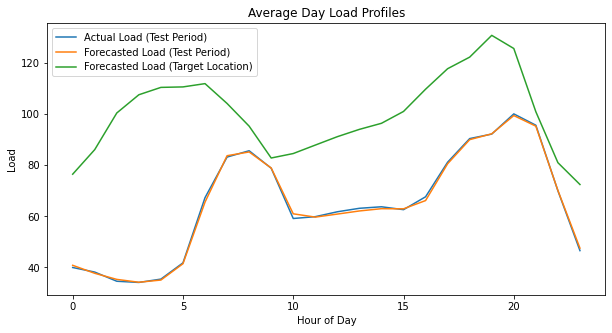
Where possible, this method has been compared, with great results, with the rare measurement data on field available in this kind of projects.
Adaptability and Scalability
The beauty of this method lies in its adaptability:
Customizable Models: By adjusting the input variables and training data, module can be tailored to enable realms or facility issues activation.
Utilizing Public Datasets: Open-source data, like the OpenEi dataset, provides valuable information for initial model training.
Scalability: The methodology can be applied to a range of projects, from small community microgrids to large-scale infrastructure developments.
Impact on Investment Decisions
Accurate load forecasting change the approach for investments in energy infrastructure:
Reducing Risk for Investors: With reliable forecasts, private investors are more likely to fund energy projects, knowing that the demand justifies the investment. This confidence attracts investment for O&G facilities or where savings is the main reason to justify the investment.
Informing Public Policy and Funding: Governments can allocate resources more effectively, prioritizing areas with the greatest need and potential for economic impact. Accurate data supports better decision-making and policy development.
Optimizing Resource Allocation: Understanding when and where energy is needed allows for the efficient deployment of renewable energy sources, reducing reliance on imported fuels and lowering operational costs.
Conclusion
The challenge of forecasting energy loads in data-scarce regions is more than a technical achievement, it's a strategic tool that empowers investment. By tailoring the use of available data and embracing innovative modeling techniques, investors can make informed investment decisions that drive the adoption of renewable energy worldwide.
This approach not only mitigates risk for investors but also contributes to sustainable development in regions that can benefit greatly from renewable energy solutions. As these models continue to be refined and more diverse datasets incorporated, the accuracy and reliability of the forecasts can only improve.